Ask retirees in their 80s what they regret about their retirement years, and the answers are remarkably consistent — and remarkably different from what most people fear before they retire. The pre-retirement fear is almost always some version of running out of money. The actual regret, as documented in study after study of older retirees, skews heavily in the opposite direction: not the experiences and spending that happened, but the ones that did not.
“I wish we had taken that trip while we still could.” “I should have helped the kids when they actually needed it.” “I kept waiting until I felt comfortable enough to spend — and then I was 80 and I had a healthy portfolio and I couldn’t do the things anymore.” These are not the regrets of people who overspent. They are the regrets of people who underspent, or who deferred the life they had planned to live until the window had closed.
Retirement regret is a planning problem with a planning solution. Understanding where it comes from — and what it costs — is the foundation for building a retirement you will not spend the final years wishing had gone differently.

The Two Kinds of Retirement Regret
Retirement regret falls into two broad categories, and they are not equally distributed. The first is financial regret: the anxiety that you spent too much, took too much risk, or made decisions that compromised your security. This regret is real and worth preventing. The second is experiential regret: the recognition, often only available in retrospect, that you had the resources and the years to do something meaningful and did not do it.
Research consistently shows that experiential regret is more common and more persistent in older age than financial regret. The psychological literature on end-of-life reflection finds that people regret the things they did not do more than the things they did. In the financial context, this translates directly: the retiree who spent conservatively and left a large estate experiences the regret of the life not fully lived. The retiree who spent their plan and experienced what they planned to experience is far less likely to look back with the particular ache of having had the means and not used them.
This does not mean overspending is risk-free or that experiential values always override financial prudence. A retirement that runs out of money at 82 is a genuine catastrophe. The point is that the balance point between “spending too much” and “spending too little” is not where most cautious retirees have set it — and the asymmetry of regret favors spending more of the plan than less.
The Windows That Close
One of the structural realities of retirement that is easy to understand abstractly but difficult to feel concretely is that the capacity for certain experiences declines over time in ways that are largely irreversible. The go-go years of early retirement — when health and energy are typically best — are genuinely different from the slow-go years that follow. Travel is more physically demanding at 78 than at 68. Extended hiking is more challenging at 80 than at 70. The grandchildren who are young and need engagement now will be teenagers and adults before long.
Every year of deferral in the early retirement period is not a neutral delay. It is a reduction in the set of things that are realistically available. A retiree who defers a major trip from 66 to 72 may find that it is still possible at 72 — but the version of the trip available at 66 may no longer be. The physical capacity for adventure, the energy for immersion, the spontaneity of the go-go years — these are finite, and they are not recovered by a larger portfolio at a later date.
The financial planning implication is that the early years of retirement are not just years to be funded — they are the years most worth funding generously. A spending plan that treats year one of retirement the same as year 25 is not conservative. It is miscalibrated. The experiences available in the first decade of retirement have a higher value-per-dollar than those available in later years, which is exactly the opposite of how most cautious retirees actually spend.
The Family Dimension of Retirement Regret
A significant subset of retirement regret involves family relationships and financial support. Retirees who could have helped an adult child through a financially difficult period and chose not to — out of caution, out of principle, out of an abundance of worry about their own needs — often report that decision with regret in later years, particularly when the child’s difficult period passed and the help was no longer needed.
Similarly, grandparent experiences — the trips taken with grandchildren while they are young, the educational contributions made when they matter most, the active presence during formative years — have a closing window that is separate from health. Grandchildren grow up. The window for being the grandparent who shows up for experiences rather than the one who left an inheritance is early retirement, not late.
This does not mean that supporting family should override financial security. It means that a retirement plan which treats all spending as equivalent — travel, family, home, healthcare — is missing the different emotional weights and different time-sensitivity of those categories. A well-designed spending plan explicitly allocates toward the high-value, time-limited experiences before the more durable and more deferrable ones.

Building a Regret-Minimizing Retirement Plan
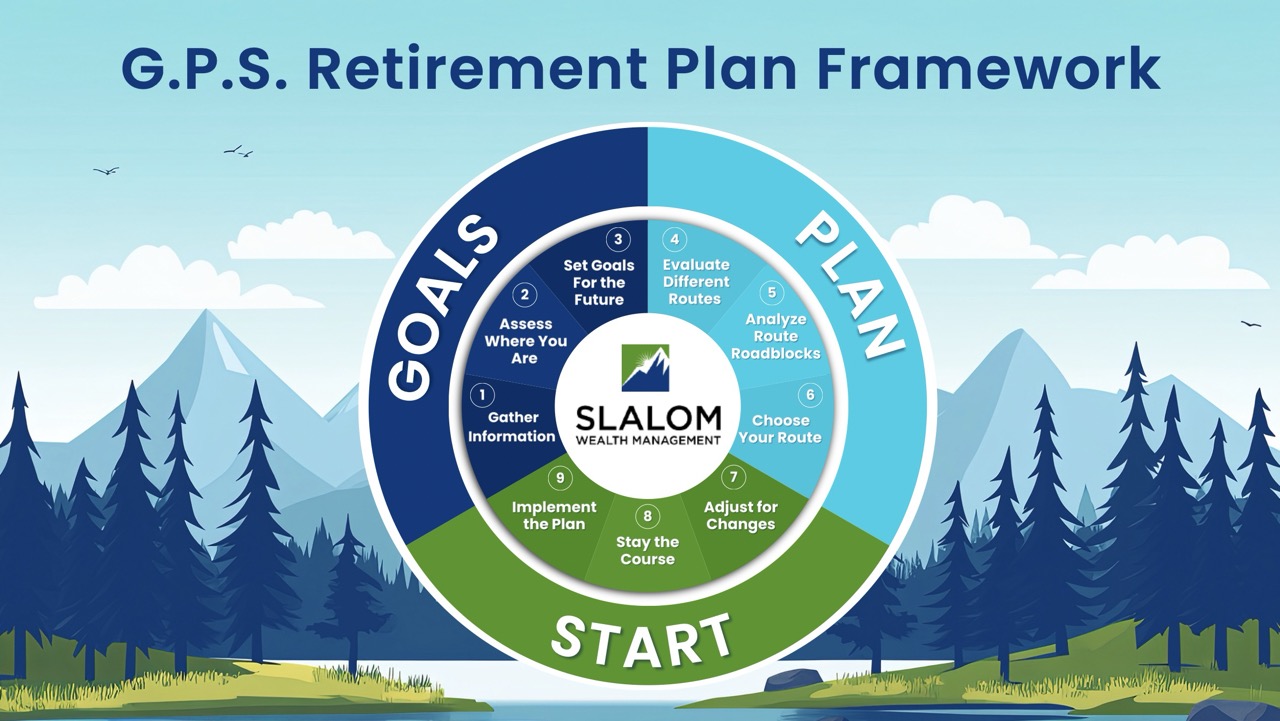
The antidote to retirement regret is not spending recklessly. It is building a plan that is genuinely designed around the life you want to live, funded deliberately and with full knowledge of what you can sustain, and executed with the permission that comes from an up-to-date financial projection.
Start with the question that most retirement plans skip: what do you actually want your retirement to look like? Not as a financial abstraction — what withdrawal rate, what portfolio allocation — but as a lived experience. What are the specific things you want to do, experience, create, or contribute in the years you have? What would you regret not doing if the window closed? This question is not soft. It is the input that drives the spending plan, and without it the spending plan has no purpose beyond self-preservation.
Once those goals are articulated, the financial question becomes: what does a sustainable plan look like that actually funds these things? Not a plan that minimizes spending and accumulates margin, but a plan that allocates specifically and generously toward the high-value, time-sensitive experiences in early retirement while maintaining the security structures — guaranteed income, reserves, long-term care planning — that protect against the scenarios most worth protecting against.
Finally, build in a review process that specifically asks the regret question: looking forward five years, what would you regret not having done? This question, asked annually as part of a financial review, catches the deferral patterns before they become the regrets of a later decade.
FAQ: How Do I Balance Enjoying Retirement Now With Not Running Out of Money Later?
The tension between enjoying retirement now and protecting security later is real, but it is much more resolvable than most cautious retirees believe. The key insight is that a retirement plan built on a sustainable withdrawal rate — one that has been stress-tested against long retirement horizons and adverse market sequences — already incorporates both goals simultaneously. Spending at your sustainable rate is not a compromise between enjoyment and security. It is the plan that achieves both. The problem for most underspenders is not that their sustainable rate is too low to fund what they want — it is that they have never had an updated, current projection that shows them, clearly and concretely, what their sustainable rate actually is. Once that number is known and trusted, the permission to spend it follows naturally.
If you want to build a retirement spending plan that is explicitly designed around the life you want to live — and that gives you the financial confidence to actually live it — the planning conversation starts with a different question than most.
Schedule a complimentary retirement lifestyle planning consultation with our office. We will start with what you actually want your retirement to look like, build the spending plan around that, and give you the projection-based confidence to spend what the plan supports without waiting for permission that never arrives on its own.